Twelve new perforated aluminium patterns for facades, screens and pergolas, from Contour and Fold to Pleat and Reed. See open area and best use for each.
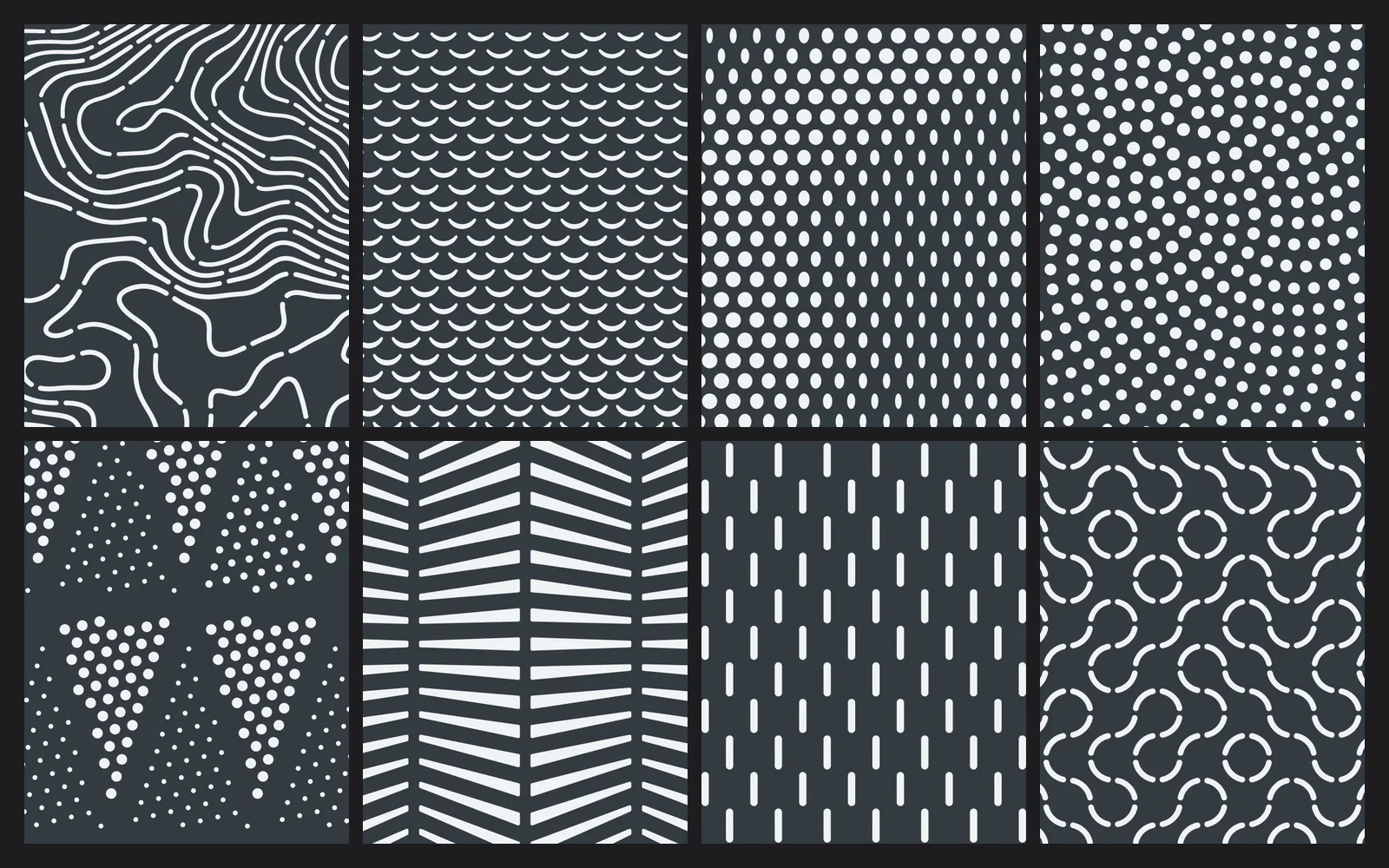
We have added twelve new patterns to the TILT pattern library. Eight are cut-through perforation patterns for facades, screens and pergolas. Four are relief patterns that press tabs out of the sheet to build a three dimensional surface. All twelve sit in the Latest range row at the top of the pattern library, with the open area and best uses shown on each one.
Images are pattern previews drawn from our artwork, not photographs of installed panels.
Before drawing anything we checked what the library was missing. It was already strong on botanical, hexagon, triangle, halftone dot, stripe and lattice patterns. It had nothing built on topographic contours, scales, turning coins, spirals, woven arcs, folded plates or pleats. Those gaps are where architects keep asking for something new, so that is where we drew.
Open area is measured across the perforated field and excludes the solid border, so you can compare patterns on the same basis.
Disc and Facet work differently. Instead of cutting holes away, they press tabs out of the sheet, so the surface carries depth and throws shadow that moves through the day.
The face-on open area is low, between 2% and 11%, because the tabs stay attached to the sheet. That makes the relief patterns facade and cladding patterns, not screening, pergola or balustrade patterns. They are new, so talk to us about samples and what suits your project before you specify one.
Each pattern on the library page carries an Ideal for note and you can filter by use. The guide we work to:
This is a guide, not an engineering statement. Balustrade height, loads and apertures, and wind load on large facades, are always checked per project. For more on matching function to pattern, read our guide to choosing the right pattern.
Every new pattern is checked against our CNC rules before it goes into the library. Curves are smooth and every cut is a closed shape, so the files run without stops. A solid 40 mm border is kept around the panel, a minimum web is held between cuts, and the sheet stays one connected piece with no loose islands. Open area is capped so the panel keeps its strength. Because one team designs, makes and installs the work, a pattern that looks good on screen is also one we know we can make well.
The patterns are cut in aluminium and finished in our full powder coat range. A dark finish makes a pattern recede and a lighter or metallic one pulls it forward, so see the pattern in your colour before you commit. Browse colours and finishes, read about our aluminium perforated panels, or request free samples. Shipping is at your cost and is confirmed with you before anything is sent.
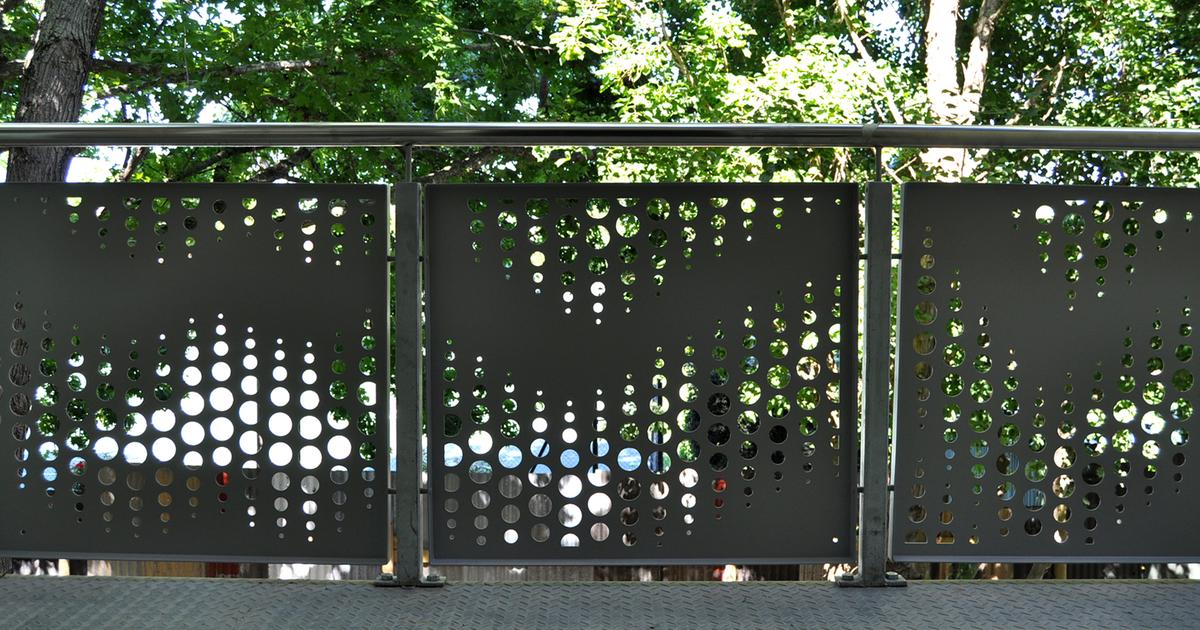
Turn, Seed and Fold are the new cut-through patterns with small, even openings that suit balustrade infill panels. Heights, loads and apertures still need checking for your project, so talk to us before you specify.
It is the share of the perforated field that is cut away, shown as a percentage. A pattern at 18% open is mostly solid with a lot of texture. A pattern at 34% lets through noticeably more light and air.
Yes. If nothing in the library is right, we develop custom patterns from your brief, a sketch or a reference image. Send us the details and we will take it from there.
Try the facade simulator to see how a perforated facade sits on a building, and use the cost estimator to get an indicative figure for cladding.
See all twelve in the pattern library, or start a conversation about your facade, screen or pergola. We also cover cladding and facades, aluminium screens and pergolas and sunscreens.